


The National Astronomical Observatory of Japan (NAOJ) has released a major update to the Hyper Suprime-Cam Legacy Archive (HSCLA), making publicly available a uniquely comprehensive astronomical dataset that catalogs approximately 1.5 billion celestial objects observed with the Subaru Telescope.
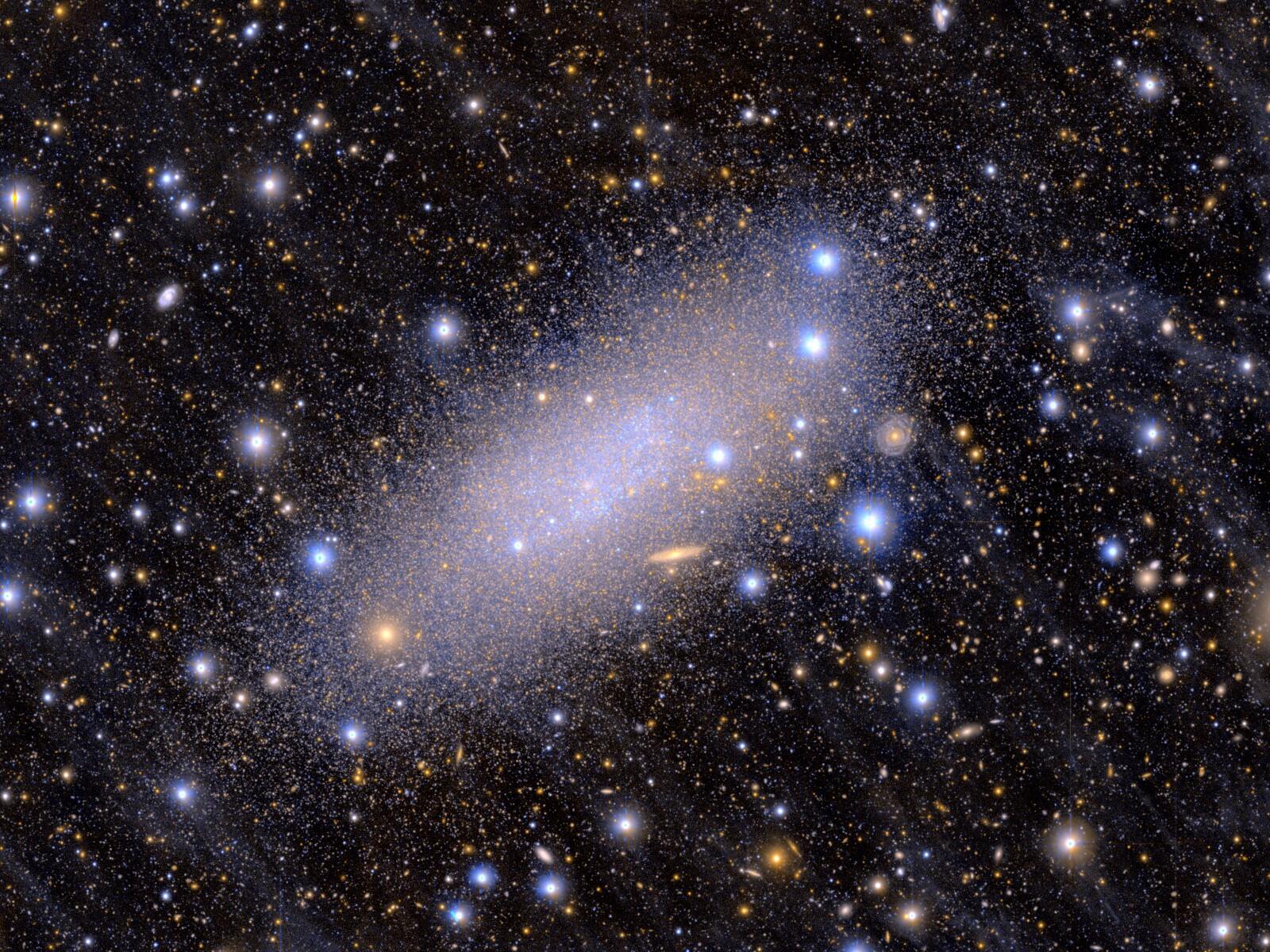
Figure 1: Image of the Pegasus Dwarf Galaxy, taken with HSC. Individual stars within the galaxy are clearly resolved. The cloud-like features sweeping across the entire image are gas within the Milky Way Galaxy. Through the dwarf galaxy, distant spiral and elliptical galaxies can also be seen, making this a particularly striking image. (Credit: NAOJ)
The Subaru Telescope's Hyper Suprime-Cam (HSC) is an ultra-wide-field, 870-megapixel prime-focus camera capable of imaging an area of sky equivalent to nine full moons in a single exposure. About ten nights around the new moon of each month are allocated to HSC observations, which are awarded to different research themes as part of an open-use program for the international astronomical community.
While data from these observations are reduced and analyzed by individual research teams, the data may also hold value far beyond their original scientific goals. To maximize the impact of these observations, Subaru Telescope launched HSCLA in 2021. The archive applies a uniform data reduction process to raw observational data from open-use programs and makes them available to researchers worldwide in a form that is ready for scientific use. In addition to image data, HSCLA provides detailed measurements of object brightness, color, size, and shape.
Following its initial release in 2021 with data from 2014, and an expansion in 2022 to include data from 2015 and 2016, the latest release now incorporates observations up to 2020, significantly expanding the archive's scope.
The archive currently comprises approximately one petabyte of data, covering about 7,400 square degrees, or 19% of the entire sky. With measurements of roughly 1.5 billion objects, HSCLA is one of the largest astronomical data archives developed in Japan. To facilitate scientific use of this vast resource, the archive also offers a suite of online tools, including an interactive image viewer and advanced catalog search functions.
"This archive is intended to serve as a foundation for a wide range of astronomical research," says Sumiko Harasawa, former Project Research Specialist at Subaru Telescope, who led the data reduction for the archive. "We hope it will enable new discoveries and foster international scientific collaboration."
The HSCLA dataset is openly available to researchers worldwide and is expected to play a key role in advancing research on galaxies, cosmic structure, and the evolution of the Universe.
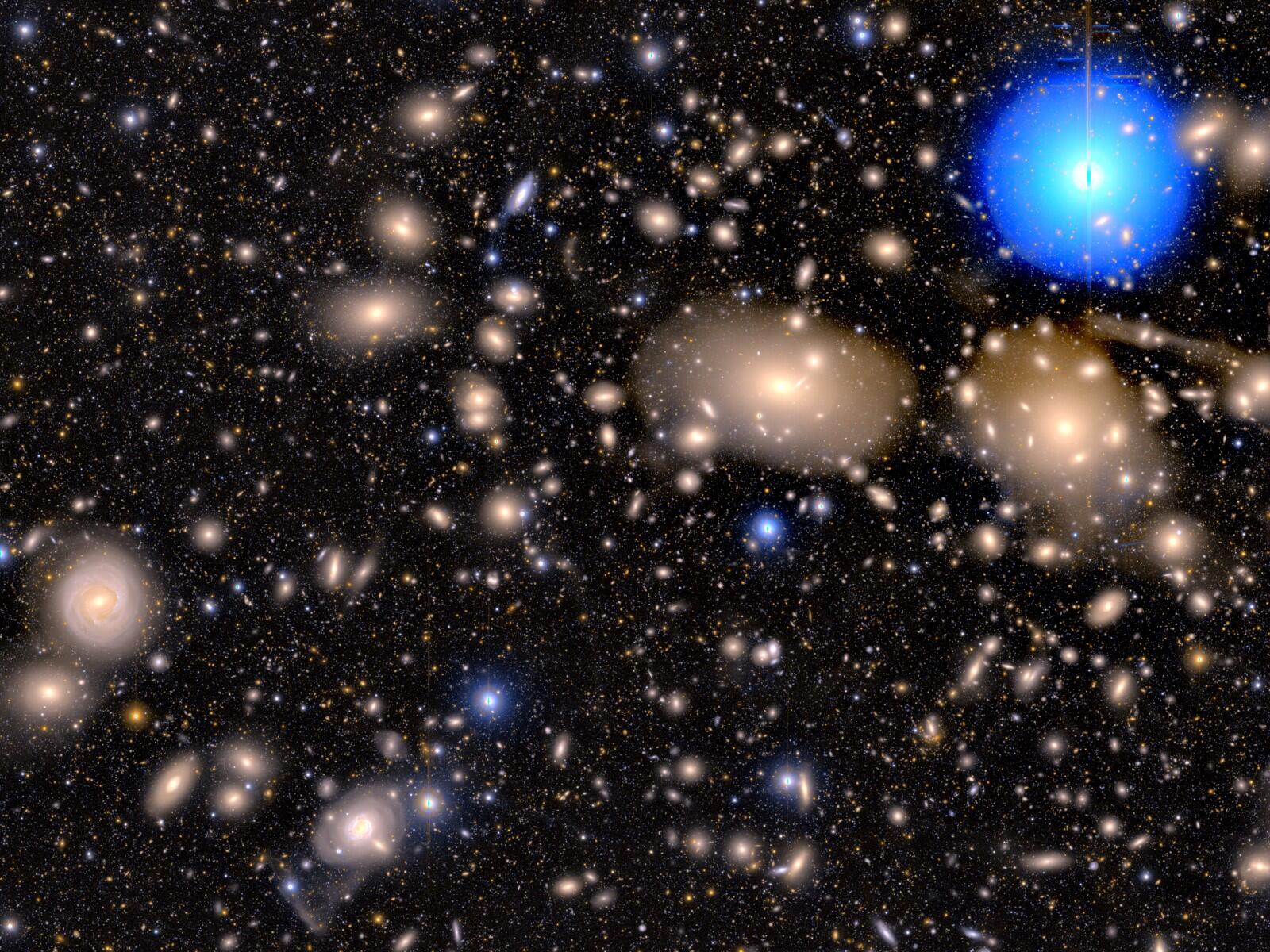
Figure 2: Image of the Coma Cluster, taken with HSC. It is one of the most massive galaxy clusters in the nearby Universe, containing a dense concentration of galaxies, including many distorted and extremely faint, diffuse galaxies. (Credit: NAOJ)
 Guidelines for Use