


Research carried out with the Subaru Telescope has led to a prestigious honor for Rhythm Shimakawa, Associate Professor at the Waseda Institute for Advanced Study, Waseda University. He received the Young Scientists’ Award in the 2026 Commendation for Science and Technology by the Minister of Education, Culture, Sports, Science and Technology.
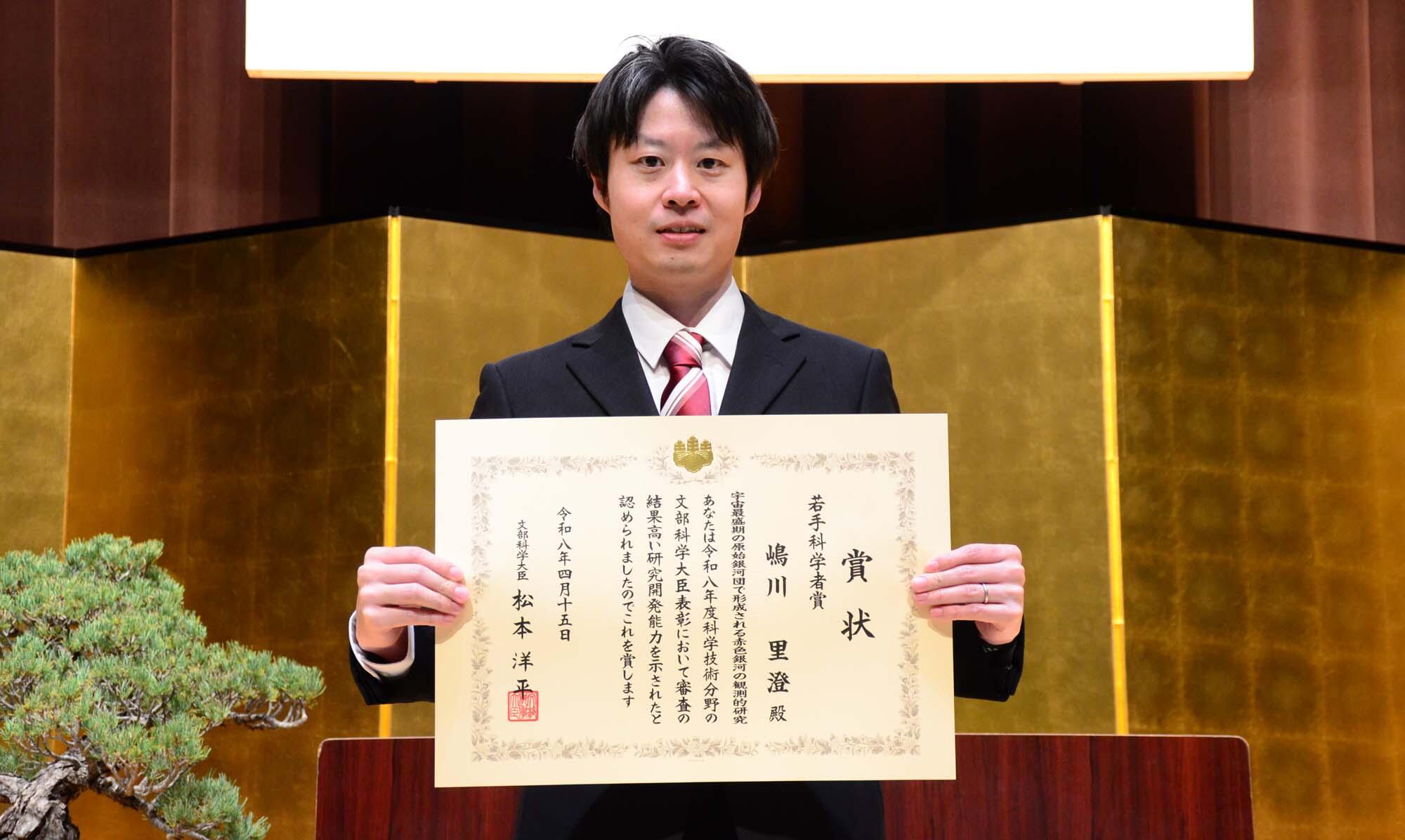
Figure 1: Associate Professor Rhythm Shimakawa, recipient of the Young Scientists’ Award. The awards ceremony was held on April 15, 2026. (Credit: Waseda University)
The Young Scientists’ Award recognizes early-career researchers who have achieved outstanding results through original ideas or by pioneering new fields of research. Shimakawa was honored for his "observational studies of red galaxies forming in protoclusters during the peak epoch of cosmic star formation."
"My research focused on how galaxies were born and evolved within protoclusters—groups of galaxies resembling ancient cities that existed 11 billion years ago," says Shimakawa. "The Multi-Object Infrared Camera and Spectrograph (MOIRCS) on the Subaru Telescope was essential to this work."
The story began about ten years ago. Using the Subaru Telescope, Shimakawa and his collaborators detected the faint light from a distant protocluster still in the process of growing. It represented a youthful stage in the life of the massive galaxy clusters seen in today’s Universe (related article).
The team then continued to investigate this protocluster using some of the world’s most advanced observatories, including the Atacama Large Millimeter/submillimeter Array (ALMA), which observes the Universe at radio wavelengths, and the James Webb Space Telescope, which provides highly sensitive infrared observations.
By combining data gathered over a decade, the researchers uncovered the evolutionary history of a densely populated "cosmic city" of galaxies. They found a concentration of massive galaxies containing supermassive black holes, yet forming few if any new stars. In other words, many of the massive galaxies in this once rapidly developing ancient cosmic city seem to have had their growth halted by the activity of supermassive black holes (related article).
Reflecting on the award, Shimakawa says, "The research I began while I was a graduate student working at Subaru Telescope has now led to this recognition. I am deeply grateful for Hawai`i’s superb observing environment, the staff who support the operation and development of the Subaru Telescope day and night, my collaborators with whom I shared many discussions, and the staff who supported my daily life at Subaru Telescope. With deep respect for Hawai`i’s rich culture and for Maunakea, I will continue striving to explore the history and truths of the Universe, building on the knowledge we have opened up together with the Subaru Telescope."
Yusei Koyama, Associate Professor at the NAOJ Subaru Telescope and a longtime collaborator of Shimakawa, comments, "I have worked with Dr. Shimakawa on many research projects, and I have always been impressed by his creativity, foresight, and uncompromising dedication to science. I am truly delighted that discoveries made with the Subaru Telescope helped lead to this wonderful recognition."
Research with the Subaru Telescope has helped nurture many outstanding scientists over the years. Today, Subaru Telescope continues to support the next generation of astronomers by giving students hands-on opportunities to experience astronomical observing.
 Guidelines for Use