Status history of PFS
- Issued on 2025/12/15: Replacement of the detector of the SM2 near-infrared camera and suspension of its operation in the S26A Semester
Replacement of the detector of the SM2 near-infrared camera and suspension of its operation in the S26A Semester
(Issued on 2025/12/15, last updates on 2026/08/05)
To address the confirmed persistence effect with the Near-Infrared camera of Spectrograph Module 2 (N2 camera), the observatory will replace the detector during semester S26A. Consequently, the N2 camera will be unavailable throughout the S26A semester. Note that PFS operations will continue using the remaining cameras. Please refer below for details.
1. Background
It has been known that the NIR detectors used for PFS (Teledyne H4RG-15) exhibit persistence features. In particular, the persistence of the detector of the N2 camera is a significant problem for our scientific goals. The persistence intensity of the camera stays at ~2% level even several hours after the latest exposure. It is three times higher than that of the other NIR cameras and has the strongest and longest-lasting effect.
Developments continue to enable the data reduction pipeline to model and remove the persistence signals reflecting complex histories of soak (i.e., detector exposures to light) and decay (decreasing intensities of persistence signals with time). Nevertheless, it was concluded that, for the N2 camera with the most severe persistence, the replacement of the detector with the spare showing significantly weaker persistence features was necessary to achieve the required quality of scientific products.
In accordance with the decision by the Subaru Science Advisory Committee (SAC) after careful discussions of the impacts and risks to scientific results with the Steering Committee of the PFS international collaboration, Subaru Telescope will replace the detector of the N2 camera during the S26A semester.
We apologize for any inconvenience and appreciate your understanding and cooperation.
2. Technical details about the persistence
High intensity and slow decay
Technical evaluations of the acquired data revealed that the persistence signals in the N2 camera are significantly stronger immediately after exposures, and also have a much slower decay rate than the other cameras.
Reciprocal impact on calibration and science data
Persistence features affect data reliability in two critical ways:
-
Effects from science exposures to calibration data: Calibration data taken in the morning (after science observations) are affected by the residual flux of science targets as well as OH sky emissions observed during the nights. Figure 1 shows the situation.
-
Effects of calibration exposures on science data: It has also been confirmed that exposing the detector to intense illumination from calibration lamps affects observations conducted in the following evening. Figure 2 illustrates the actual cases.
Figure 3 show the comparison of persistence decay. The N2 camera shows a significantly slower declination of the signal compared to the other cameras. Because significant effects of persistence were observed both in the science data and in the calibration data of the N2 camera during the past semesters, the replacement of the detector was decided.
3. Impacts on science operation and the current schedule for resuming the N2 camera operation
Due to the detector replacement work, the observation schedule will be as follows:
- The PFS observation runs in S26A will be conducted as scheduled, except for the N2 camera, which is suspended throughout the semester.
- Replacement of the N2 camera will be done in S26A, and full camera operations will resume upon the first PFS run in the S26B semester.
4. Mitigation measures for allocated programs in the S26A semester
To minimize the impact of the N2 camera suspension on the S26A programs, the allocated times for the relevant proposals have been adjusted accordingly. In addition, we are exploring ways to optimize the planning software to allocate fibers with minimal impact on the scientific purposes of the programs. We plan to adopt this optimization once it becomes feasible.
5. Figures
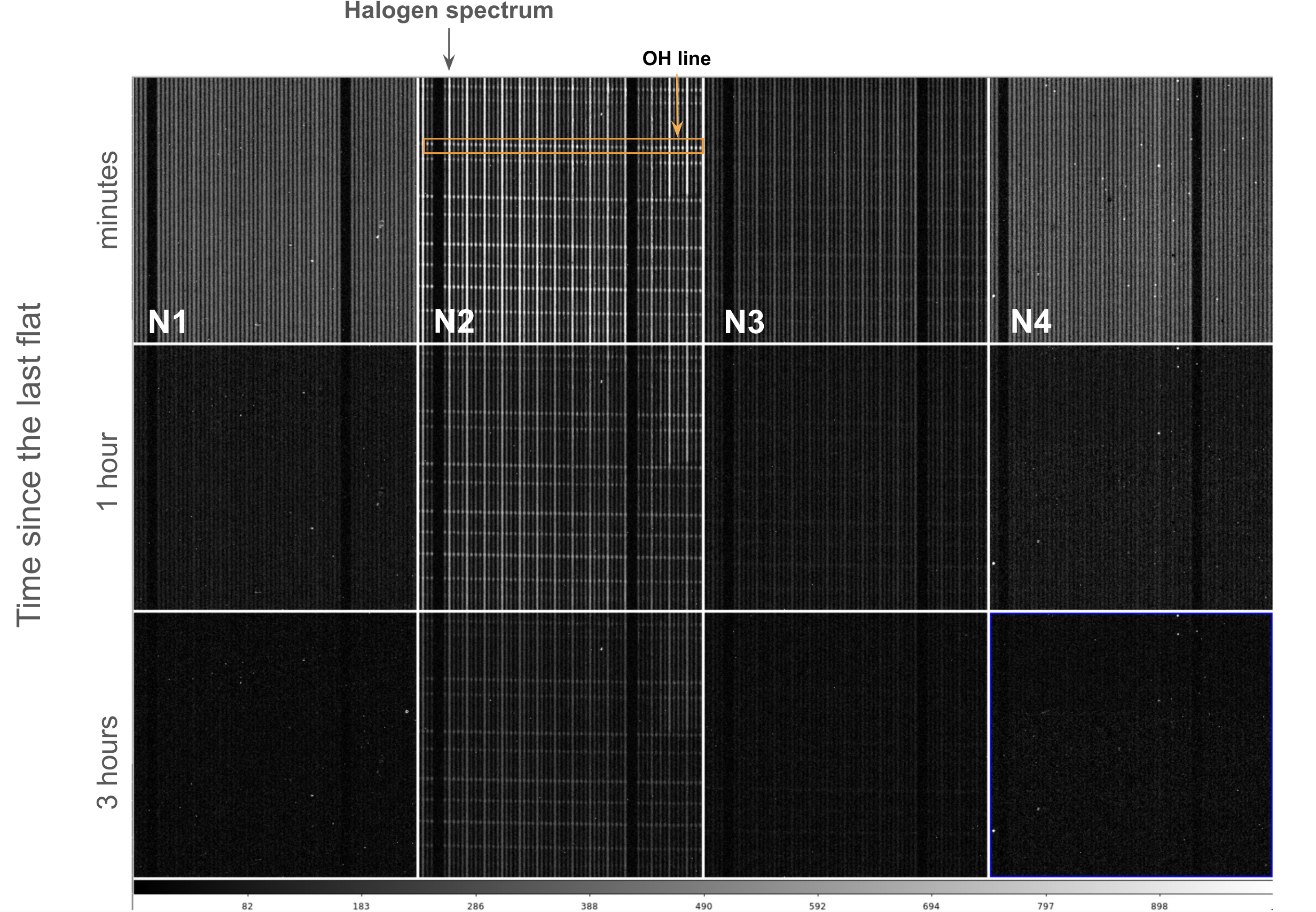
Figure 1: The time evolution of the persistence features in all near-infrared cameras.
These are 900-second dark frames taken after full-night observation and calibration data acquisition. From top to bottom, images just after calibration, at 1 hour, and at 3 hours are displayed. The vertical stripes are the persistence from halogen spectra, and the horizontal spots are from OH lines. The persistence feature of the N2 camera is clearly bright and persists longer than that of other spectrograph modules.
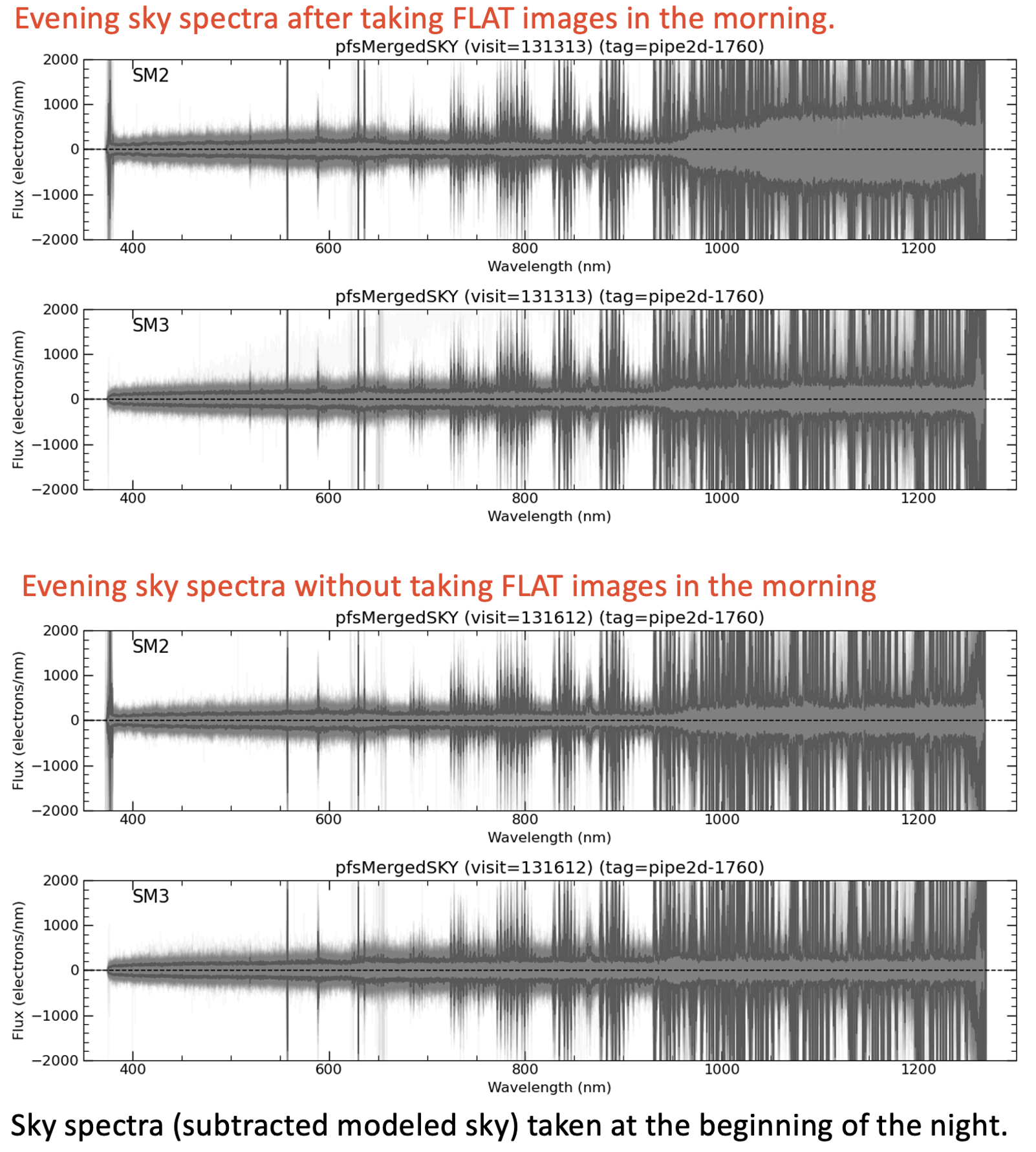
Figure 2: Impact of the calibration data taken in the morning on the next evening spectra.
Evening sky spectra obtained after taking FLAT in the morning were clearly affected by the persistence features in the near-infrared band of SM2.

Figure 3: Time Evolution of Persistence Intensity.
This plot illustrates the persistence signal intensity over time since the end of the last flat image (Figure 1). Compared to the typical performance of other detectors, the N2 camera (Orange) shows a significantly slower decay rate, retaining high residual signal levels for an extended period (over 5 hours).
6. Performance of the new detector (preliminary)
After repracing the detector, the N2 camera was re-installed at the end of May 2026. Image quality and the camera aignment are comparable to those before replacement work. In the PFS run in July 2026, the performance of the N2 camewa with the new detecotr was tested. There are large defect spot on the detector, and ppproximately 20 fibers at the edges (= 40 in toral) are affected (from 1070nm to 1130nm in worset case, the edgemost fibers.) Persistence is under analysis.