Comets are natural "time capsules," preserving ice and dust from the birth of the Solar System 4.6 billion years ago. Yet the solid nucleus of a comet is rarely observed directly, because it is normally hidden by a cloud of gas and dust known as a coma.
A research team including scientists from the University of Occupational and Environmental Health, Kyoto Sangyo University, and the National Astronomical Observatory of Japan discovered a nearly dormant, coma-free comet in publicly available archival data from the Subaru Telescope's Hyper Suprime-Cam (HSC). These observations enabled the first precise ground-based measurement of the reflectance properties of a cometary nucleus, providing new insights into how comets differ from asteroids and how they have evolved over time.
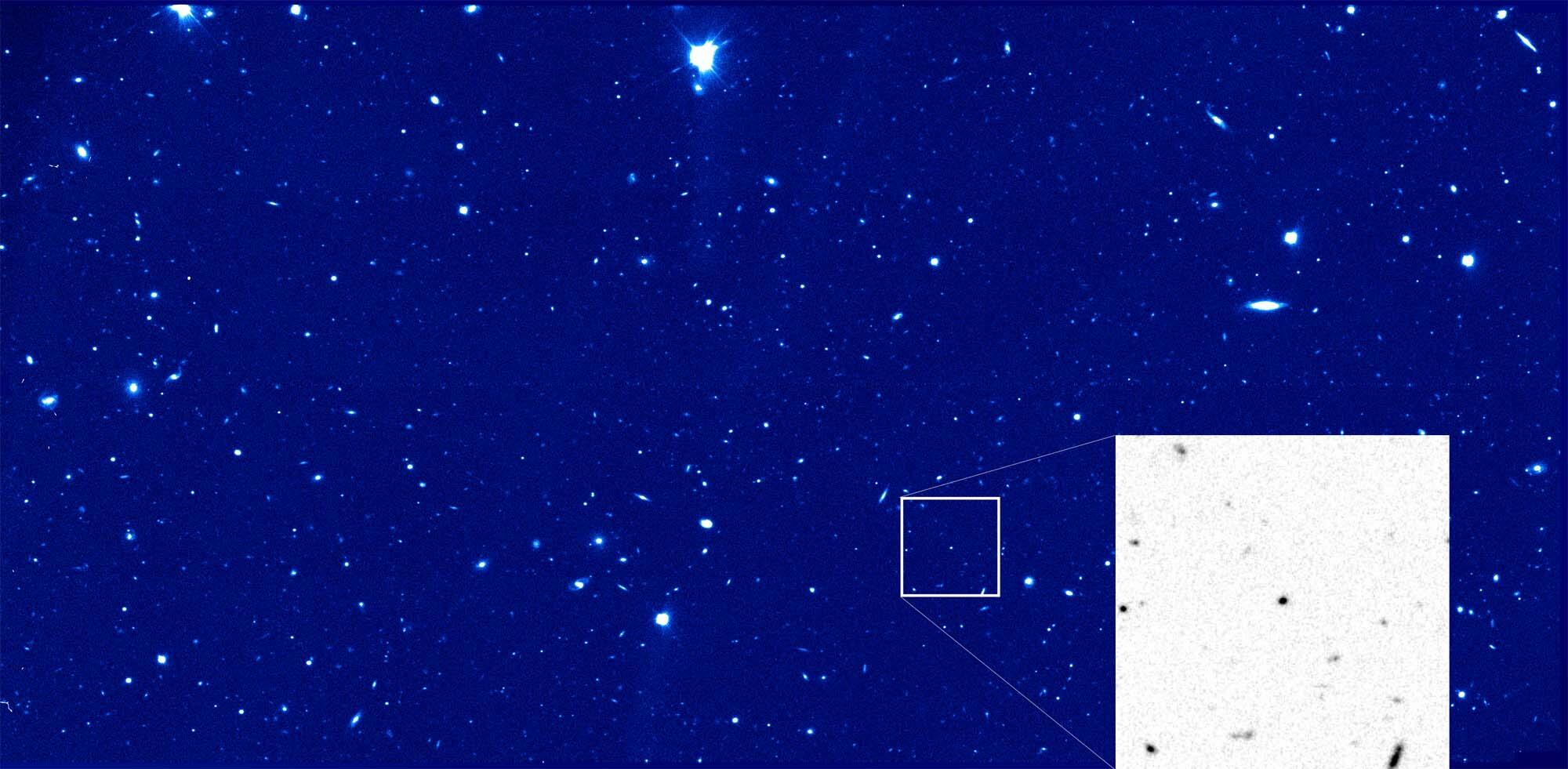
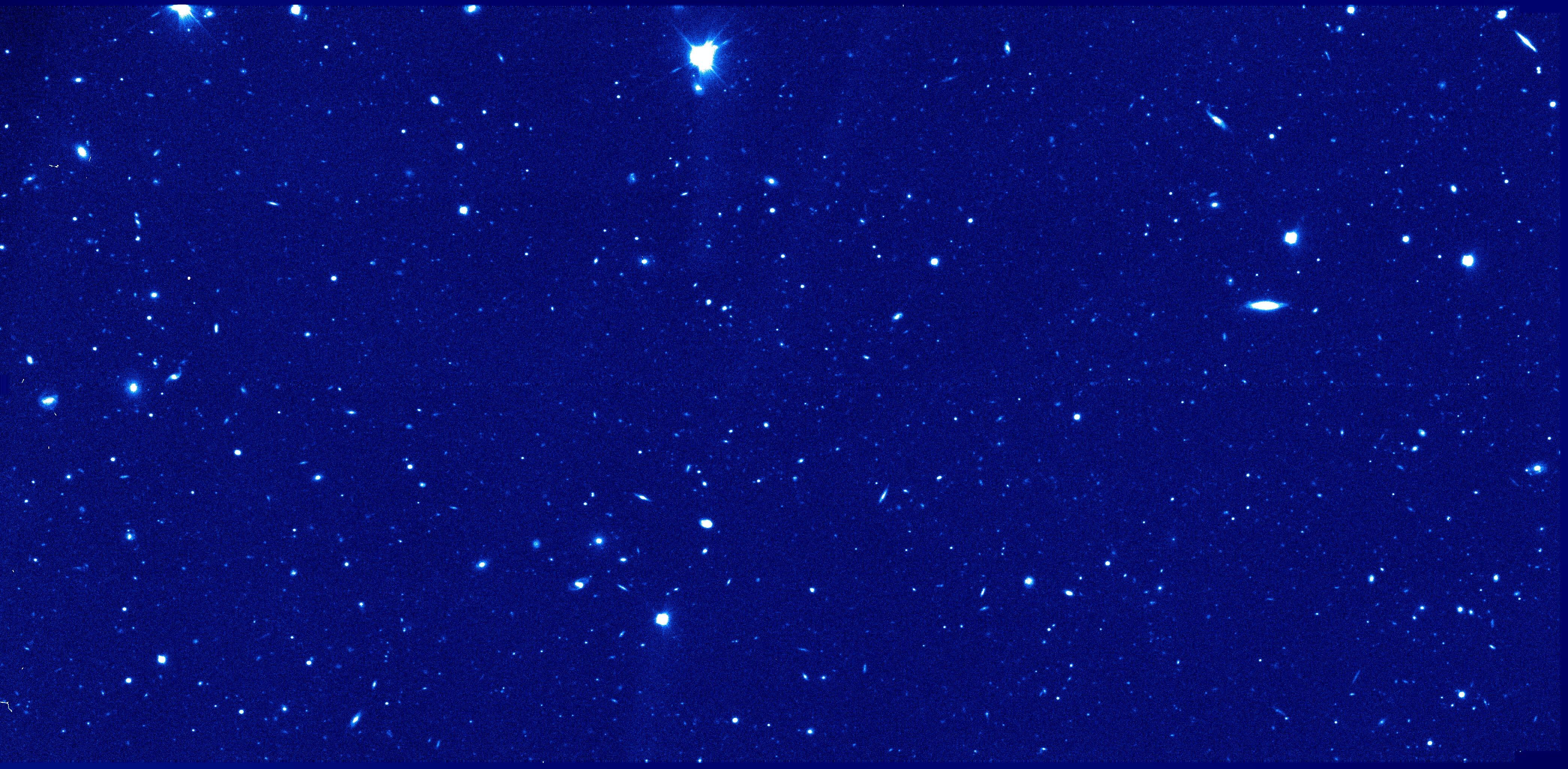
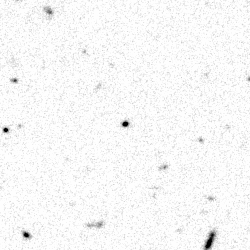
Figure 1: Comet 28P/Neujmin captured by the Subaru Telescope's Hyper Suprime-Cam (HSC) (white box and enlarged inset). The image shown is from one of HSC's 104 CCD detectors. In addition to the comet, the image contains more than 2,000 stars and galaxies. View the original images here (CCD image, Enlarged image). (Credit: NAOJ)
Why Are Cometary Nuclei Important?
Comets are small bodies composed primarily of ice and dust. They are thought to have formed in the outer Solar System and remained largely unchanged since the early days of the Solar System. Asteroids, by contrast, are rocky bodies found mainly between the orbits of Mars and Jupiter.
Comets and asteroids were once regarded as completely different types of objects. However, recent observations have blurred the distinction, with the discovery of water-bearing asteroids and cometary nuclei containing minerals similar to those found on asteroids.
Determining whether the surfaces of cometary nuclei are truly similar to those of asteroids—or fundamentally different—is an important step toward understanding how the bodies in our Solar System formed and how they have evolved over billions of years.
Why Are Cometary Nuclei Difficult to Observe?
Studying cometary nuclei directly is, however, extremely challenging. A cometary nucleus can be observed directly only when the comet is far enough from the Sun that its ice remains frozen and no coma forms. At such distances, comets are extremely faint—only very large-aperture telescopes can detect them.
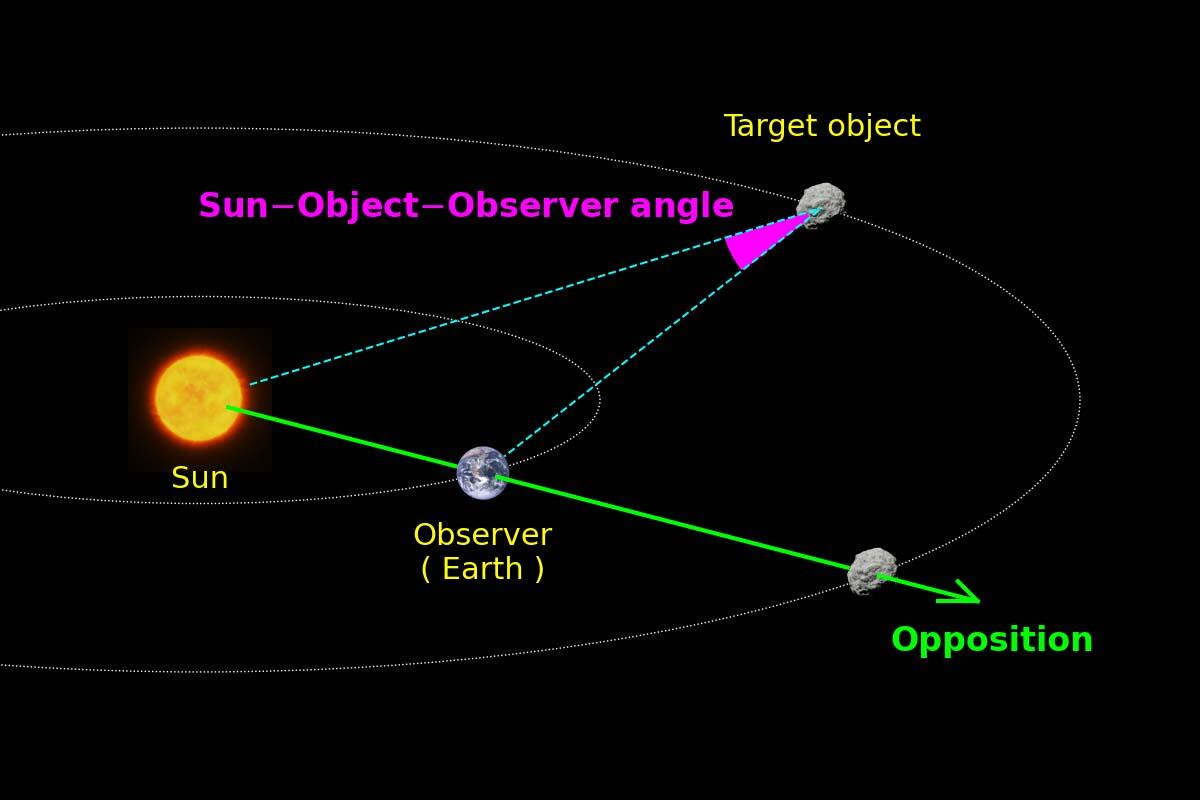
In addition, investigating the surface properties of a cometary nucleus requires observations made under a special viewing geometry known as opposition, in which the observer views the comet with the Sun almost directly behind them (Figure 2).
Near opposition, the object appears brighter than usual, and the way its brightness changes provides clues to the properties of the particles covering its surface (Note 1). Opportunities to observe a comet under such favorable conditions are extremely rare.
A Chance Discovery in the Subaru Telescope Archive
The research team has been conducting a systematic search of publicly available archival data from the Hyper Suprime-Cam (HSC) Subaru Strategic Program (HSC-SSP) to identify Solar System objects serendipitously captured in the images.
During this search, they discovered Comet 28P/Neujmin at a distance of more than 10 astronomical units from the Sun—farther than from the Sun to Saturn—in a dormant state with no visible coma (Figure 1). Remarkably, the comet had been observed under nearly ideal conditions, close to opposition, where the Sun, the comet, and the Earth were almost perfectly aligned. This enabled the team to make the first clear ground-based detection of the opposition brightening of a cometary nucleus (Figure 3, left).
The discovery was made possible by the Subaru Telescope's 8.2-meter primary mirror, capable of detecting such a faint and distant cometary nucleus, together with HSC's exceptionally wide field of view, which allowed the comet to appear serendipitously in observations taken for a different scientific purpose.
A Comet That Looks Like an Asteroid—But Behaves Differently
The analysis showed that the surface color of Comet 28P/Neujmin closely resembles that of dark, reddish asteroids. These asteroids have very low reflectance and are thought to be rich in water-bearing materials. This result is consistent with previous studies.
However, when the researchers examined how the comet's brightness changed near opposition, they found an unexpected difference. These dark asteroids generally exhibit only a modest increase in brightness when viewed near opposition. In contrast, Comet 28P/Neujmin showed a much stronger brightening, comparable to that of high-reflectance asteroid types (Figure 3, right).
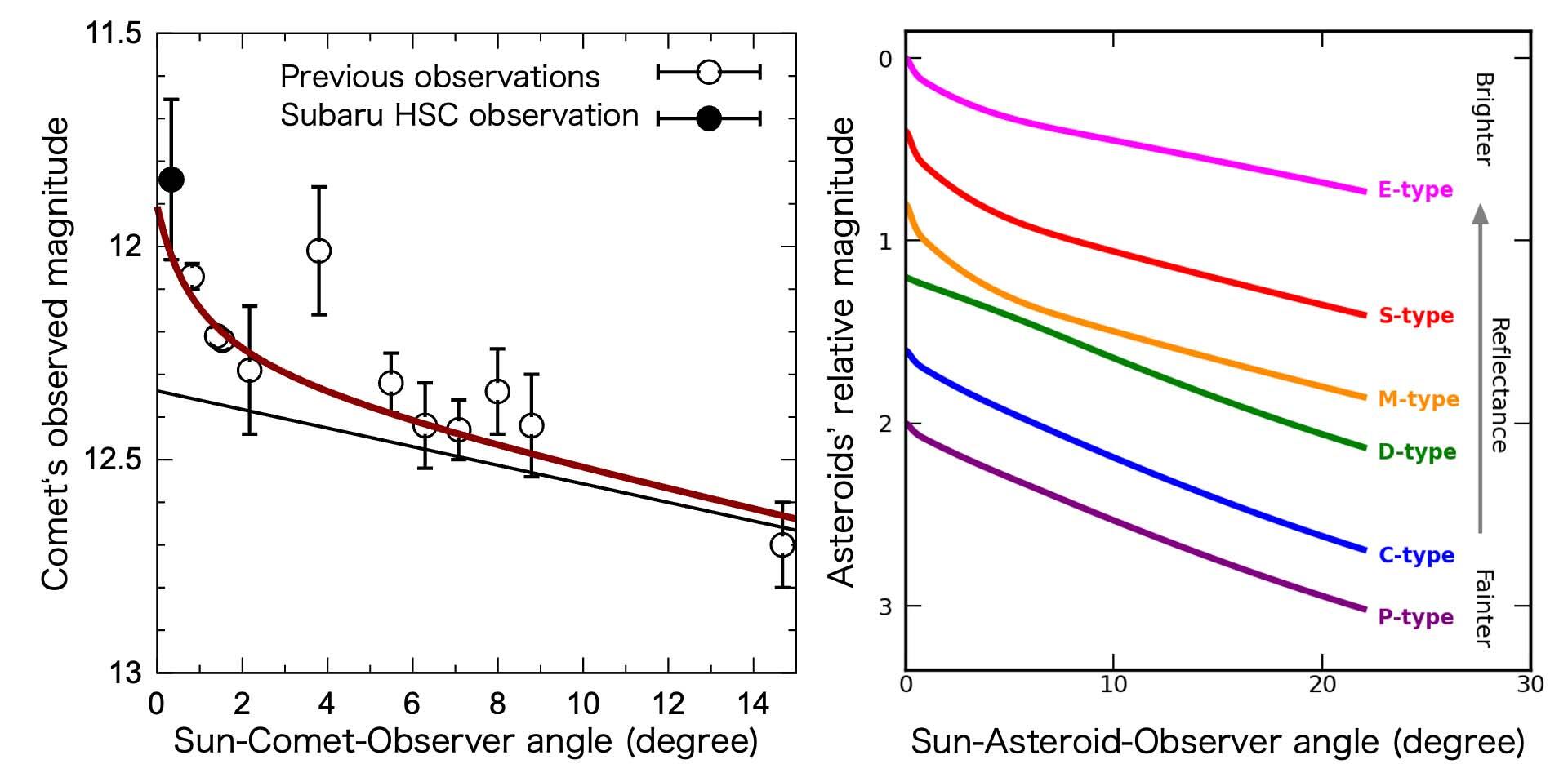
Figure 3: Brightening of Comet 28P/Neujmin near opposition (left) and comparison with different asteroid types (right). The left panel shows that the data point obtained at a Sun–comet–Earth phase angle of 0.33° (black circle), corresponding to an almost face-on viewing geometry, is significantly brighter than observations made at larger phase angles. Such a sharp increase in brightness is not seen in dark, low-reflectance asteroid types (D-, C-, and P-type; right panel). Instead, the brightening observed for Comet 28P/Neujmin is comparable to that of high-reflectance asteroid types (E-, S-, and M-type). (Credit: NAOJ)
These findings provide important clues about the fine-scale structure of the comet's surface, including the size of the surface grains, the amount of empty space between them, and the way the grains are packed together. The results suggest that although the nucleus of Comet 28P/Neujmin resembles low-reflectance asteroids in terms of its color and overall reflectance, its surface microstructure may be fundamentally different.
As comets repeatedly approach the Sun, their surface ice sublimates. This ongoing activity may have gradually produced a surface structure unlike that found on asteroids.
The Scientific Value of Archival Data
This study demonstrates how the combination of the Subaru Telescope's large aperture, HSC's wide field of view, and the publicly available HSC-SSP data archive can lead to unexpected discoveries, even for Solar System objects that were not the original targets of the observations.
Dr. Takafumi Ootsubo (University of Occupational and Environmental Health), lead author of the paper, comments, "The same archive likely contains many more Solar System objects waiting to be found. By applying the same observational approach to many more comets in the future, we hope to uncover how the surface structures of cometary nuclei have evolved over time, ultimately providing new insights into how Solar System bodies formed and evolved into the objects we see today."
This study was published in the Publications of the Astronomical Society of Japan (PASJ) on August 25, 2026 (Ootsubo et al., "Opposition effect of comet 28P/Neujmin observed with Subaru Hyper Suprime-Cam").
This research is based on data obtained with the Subaru Telescope and retrieved from the Hyper Suprime-Cam (HSC) data archive system operated by the Astronomy Data Center and the Subaru Telescope of the National Astronomical Observatory of Japan (NAOJ).
This work was supported by JSPS KAKENHI Grants (Nos. 23H01234, 23K25930, 24H00271, 23H01217, 23K25913, 23K22557, 24K00684, 25K24630, and 25K07393), in cooperation with the NEDO project "Technology Development of Next-Generation Computing for AI Chips Enabling High-Efficiency and High-Speed Processing," under the research program "Ultra-Large-Scale Data Analysis: Application to e-Science."
(Note 1) When an airless body is viewed almost directly from the direction of the Sun, shadows cast by surface particles become nearly invisible, making the surface appear brighter than usual. In addition, light scattered multiple times between the particles tends to be redirected back toward the observer, sometimes producing a sharp increase in brightness. This phenomenon is known as the opposition effect. By measuring the opposition effect, astronomers can infer physical properties of the surface, such as the size of the particles and how densely they are packed.
The Subaru Telescope is a large optical-infrared telescope operated by the National Astronomical Observatory of Japan, National Institutes of Natural Sciences with the support of the MEXT Project to Promote Large Scientific Frontiers. We are honored and grateful for the opportunity of observing the Universe from Maunakea, which has cultural, historical, and natural significance in Hawai`i.
 Guidelines for Use