


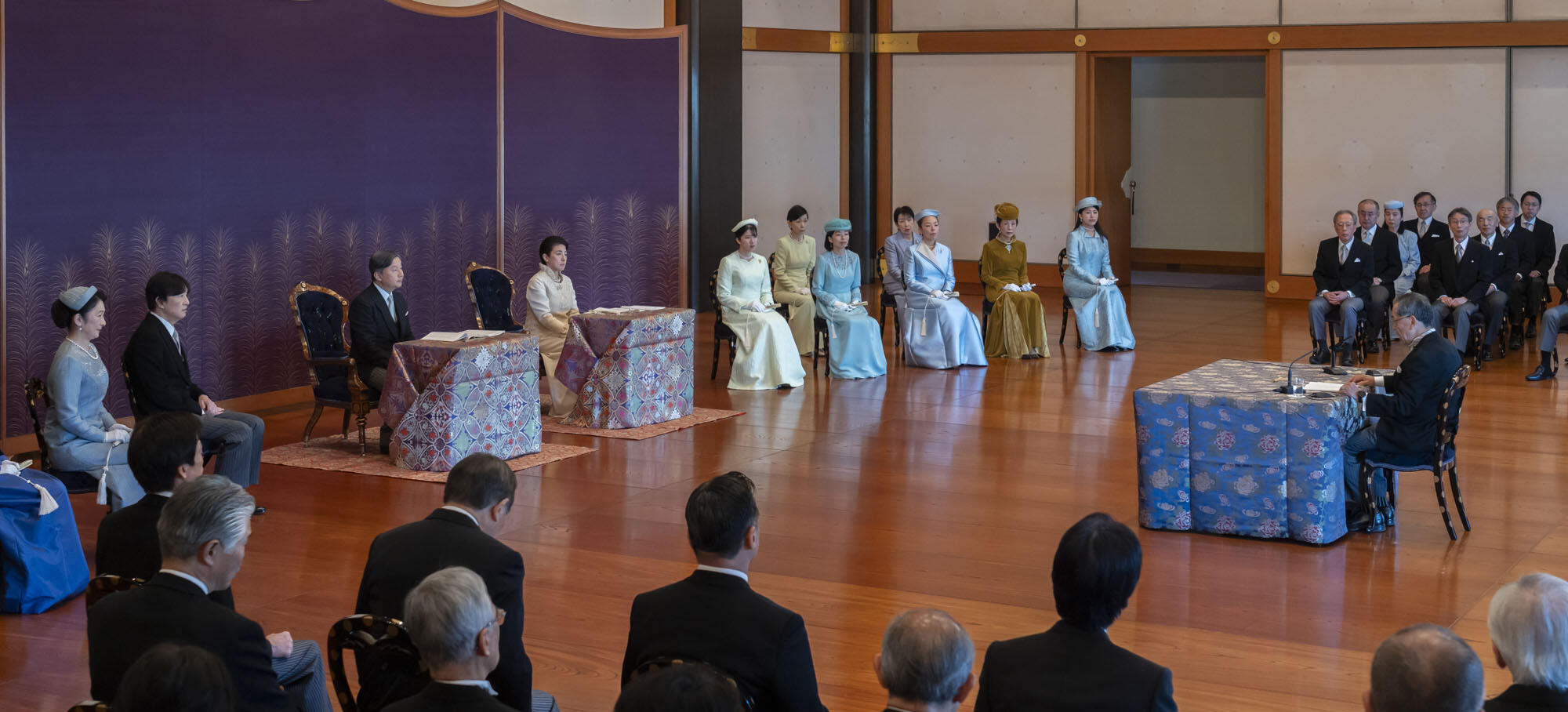
Figure 1: Delivering a lecture at the New Year "Kōsho Hajime" ceremony. Each year at the Imperial Palace in Japan, leading scholars are invited to speak at a traditional event known as Kōsho Hajime. In January 2026, Masanori Iye delivered a lecture on how observational astronomy has advanced over the past century, and how Japan—through facilities such as the Subaru Telescope—has contributed to this progress. (Courtesy of the Imperial Household Agency)
The "Kōsho Hajime" ceremony is an annual event held at the Imperial Palace in Japan, where His Majesty the Emperor listens to lectures on academic topics. This tradition dates back to 1869, when scholars were invited to speak on classical Chinese and Japanese literature. Since 1953, each year has featured three speakers—one each from the humanities, social sciences, and natural sciences.
Astronomy has been represented on several occasions. In 1953, Yusuke Hagihara, then the Director of Tokyo Astronomical Observatory, gave a lecture on modern theories of cosmic evolution. He is said to have spoken passionately about the plan to build the 188-cm telescope at Okayama Astrophysical Observatory, a project that later became a major milestone in Japanese astronomy.
Other distinguished astronomers who have spoken at this ceremony include Chushiro Hayashi (1993), Minoru Oda (1998), and Katsuhiko Sato (2016). It was my great honor to deliver a lecture at the ceremony held on January 9, 2026.
Lecture Theme: Advances in Observational Astronomy
I received the invitation about two years in advance and chose the topic "The Frontiers of Observational Astronomy and Japan’s Contributions." My lecture covered four main points:
- A century of modern cosmology
About 100 years have passed since Edwin Hubble showed that the Universe extends beyond our Galaxy and discovered its expansion. I began by reviewing how our understanding of the Universe has evolved since then. - Japan’s role in observational astronomy
I introduced Japan’s contributions, particularly through the Subaru Telescope in Hawai‘i, which has played a major role in studies of galaxies and exoplanets. - Future prospects with next-generation telescopes
Looking ahead, new large telescopes are expected to detect signs of life on exoplanets and provide direct measurement of the accelerating expansion of the Universe. - Astronomy and humanity’s perspective
Finally, I reflected on how astronomy shapes our view of humanity and civilization. Considering the 13.8-billion-year history of the Universe, the 4.6-billion-year history of Earth, and the much shorter history of human civilization, I emphasized the importance of building a sustainable and mature society that can overcome challenges such as war and environmental destruction.
A Unique Atmosphere
At the ceremony, only the Emperor and Empress have printed summaries of the lectures. Other attendees listen without any materials or visual aids, in a formal and focused setting. Understanding such a lecture—especially one that includes technical terms—can be quite demanding.
What impressed me most was the attentiveness of Their Majesties and the members of the Imperial Family, who listened intently throughout the lecture.
The 2026 Speakers
- The speakers and their topics this year were:
- Masako Sasaki (Saga University of Arts, Professor Emeritus): Japanese painting in the Edo period
- Takashi Mikuriya (The University of Tokyo, Professor Emeritus): What is oral history?
- Myself: Frontiers of observational astronomy and Japan’s contributions
It was encouraging to see that Their Majesties and other attendees appeared to be engaged, often nodding as they listened.
Summaries of the lectures are available (in Japanese) on the website of the Imperial Household Agency, and videos of the ceremony have been made available online. Afterward, I received many comments saying that the lecture was clear and engaging.
A Conversation After the Lecture
After the ceremony, I had the opportunity to speak with Their Majesties. In addition to discussing the lecture, His Majesty shared memories of visiting Okayama Astrophysical Observatory and spoke about his own experience photographing celestial objects with his reflecting telescope. Our conversation naturally turned to astronomy and was both enjoyable and inspiring.
Hopefully, this lecture will serve as an opportunity for more people to learn about the significance and fascination of astronomy.
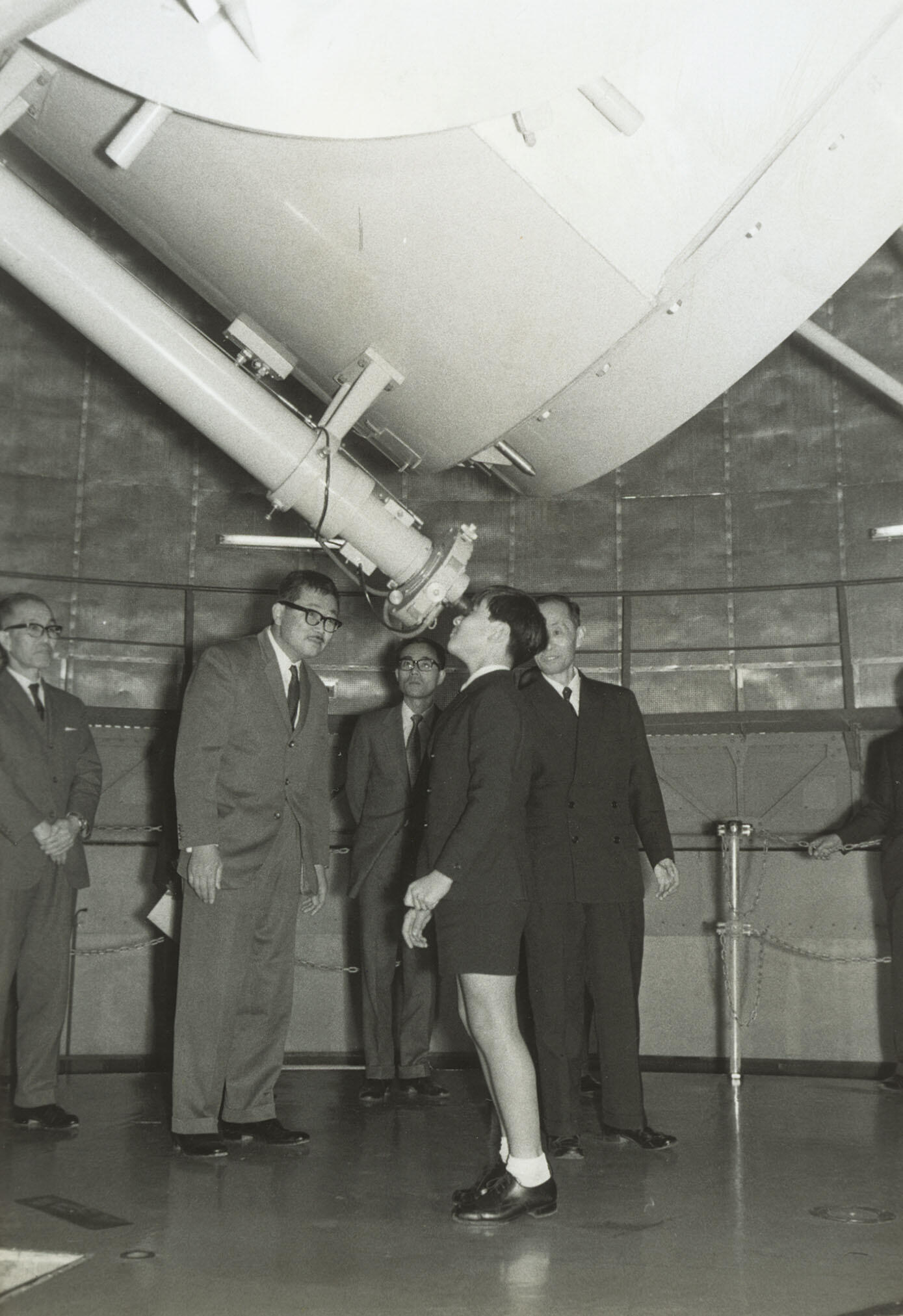
Figure 2: Crown Prince Naruhito (now His Majesty the Emperor) visiting Okayama Astrophysical Observatory in 1971. (Credit: NAOJ)
Masanori Iye
Professor Emeritus, National Astronomical Observatory of Japan
 Guidelines for Use