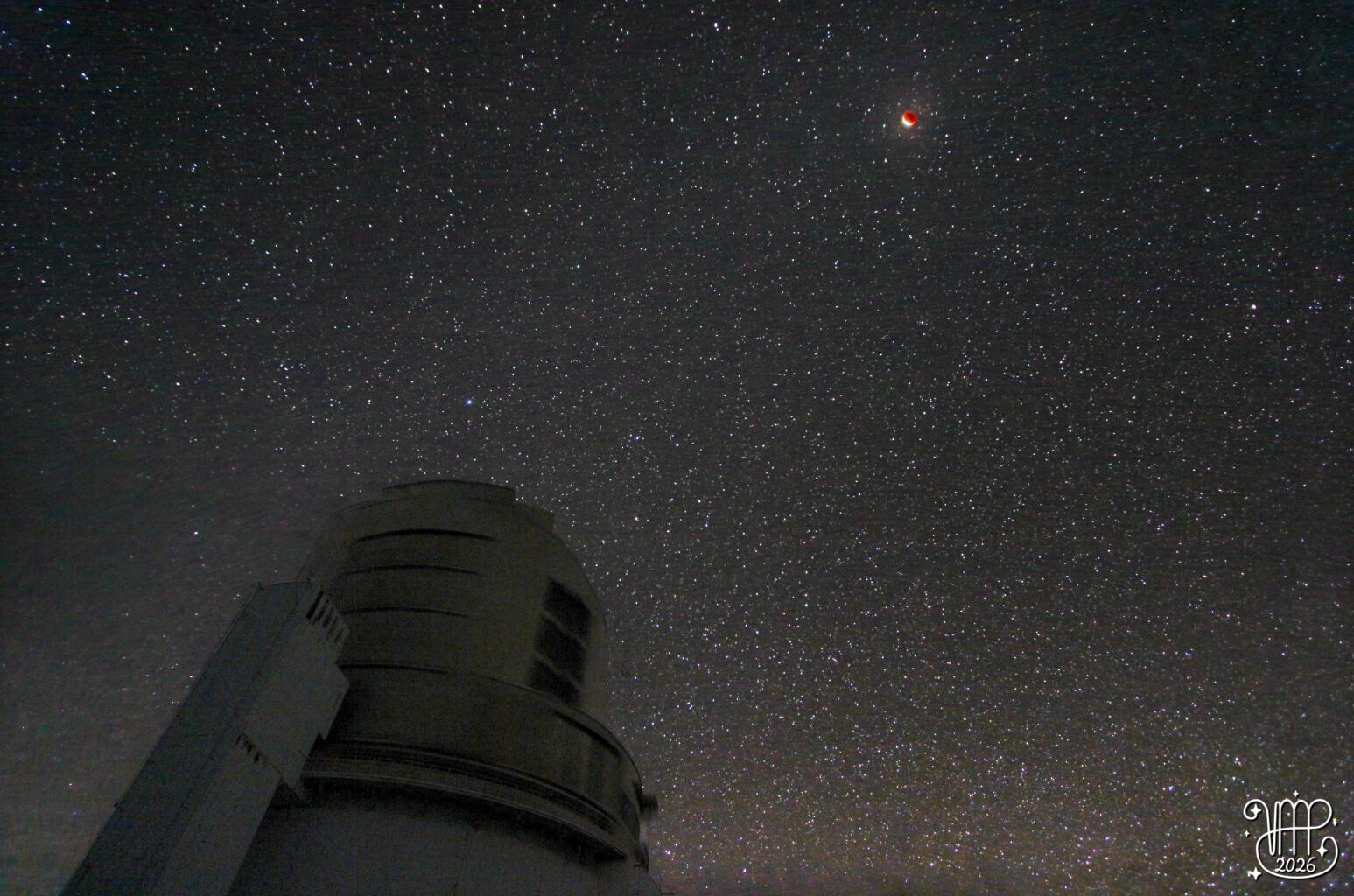
On the night of Monday, March 2, 2026, a total lunar eclipse unfolded over the Pacific region. Unlike a solar eclipse, which is visible only from a narrow path, a lunar eclipse can be seen from anywhere on Earth where the Moon is above the horizon during that time. Subaru Telescope support astronomers, Vera Maria Passegger and Ichi Tanaka observed the event from the summit area of Maunakea, capturing images and providing a live stream.
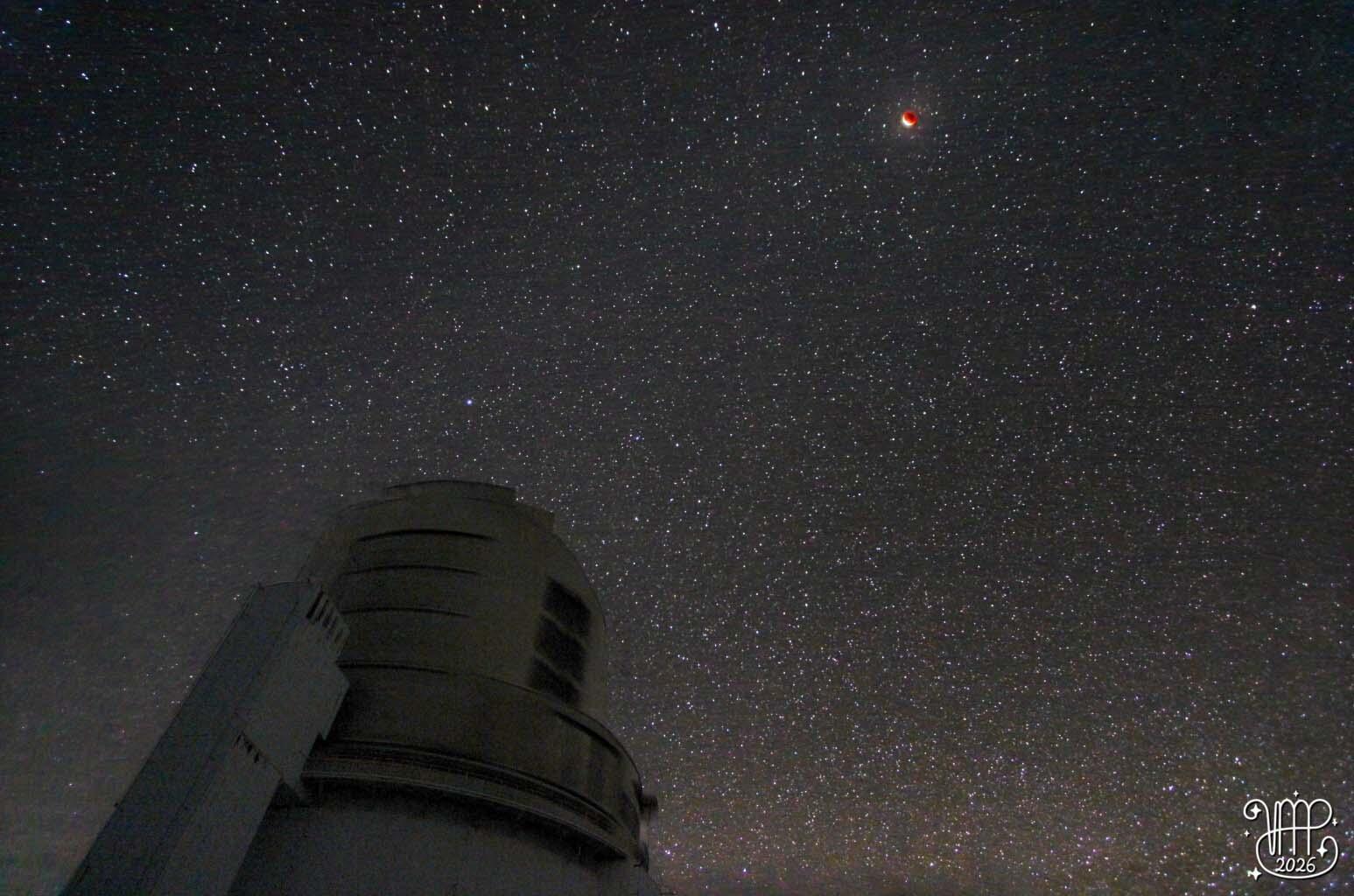
Figure 1: The Subaru Telescope under the eclipsed Moon. The original image is here (2.1 MB). (Canon EOS 600D, 210 second exposure, 10mm, f3.5, ISO 3200) (Credit: Dr. Vera Maria Passegger/NAOJ)
Although the night began with thick clouds, the sky cleared shortly after the start of totality. "We are really lucky with the weather," Passegger said as the Moon moved through Earth’s shadow. During totality, the Moon appears reddish because Earth’s atmosphere scatters the blue wavelengths of sunlight while allowing the red wavelengths to pass through more directly and illuminate the lunar surface. "And if someone were standing on the surface of the Moon during a total lunar eclipse," Passegger adds, "they would see a solar eclipse as the Sun disappears behind Earth. The outer atmosphere would glow red."
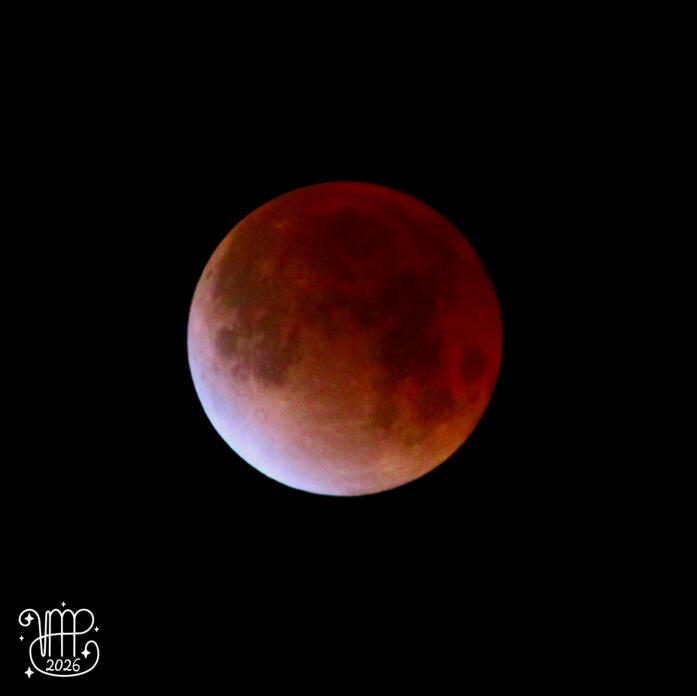
Figure 2: The full Moon during totality. (Canon EOS 600D, 1/5 second exposure, 300mm, f5.7, ISO 3200) (Credit: Dr. Vera Maria Passegger/NAOJ)
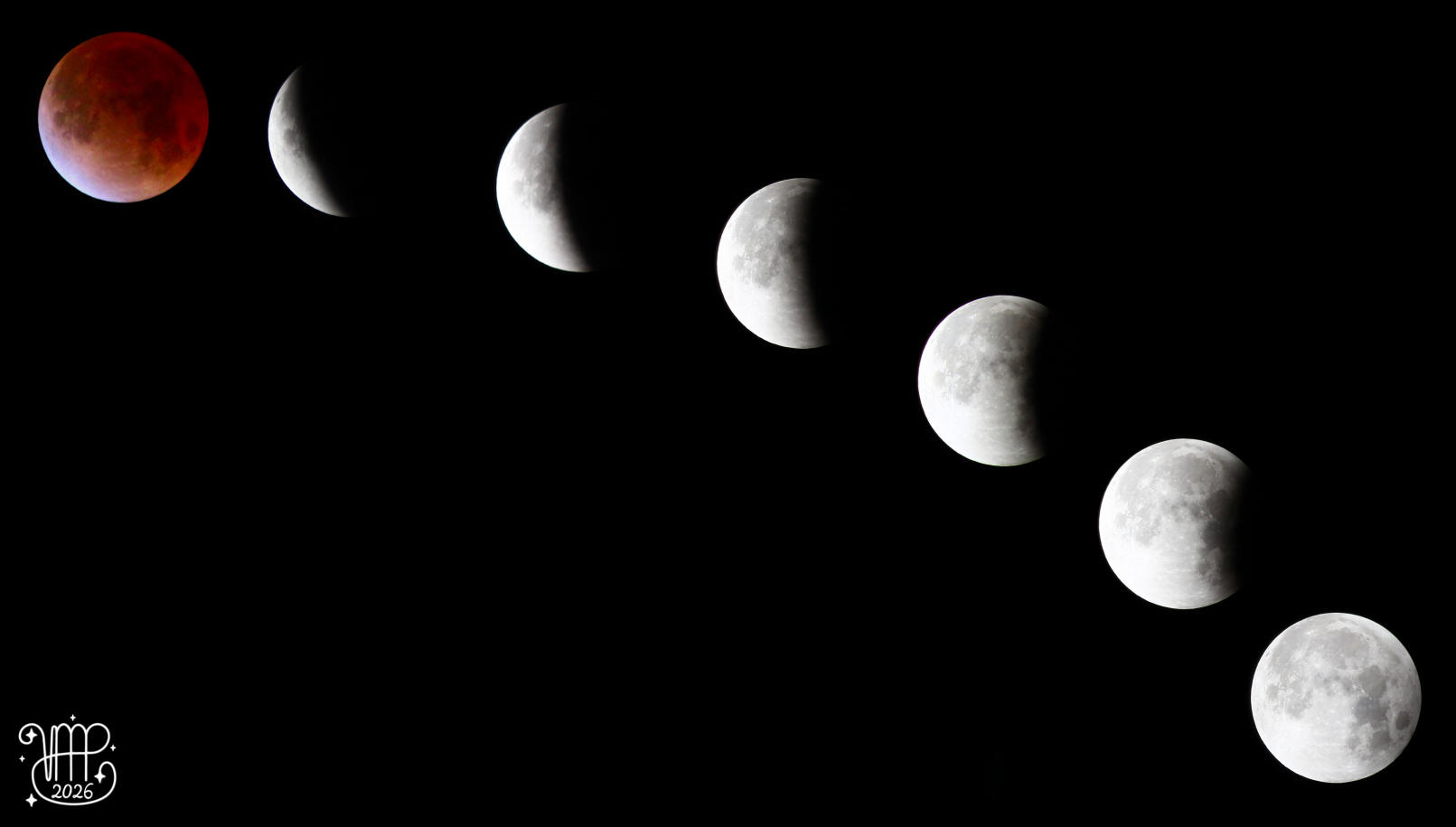
Figure 3: Composite image of the final stages of the total lunar eclipse. (Canon EOS 600D, 300mm) (Credit: Dr. Vera Maria Passegger/NAOJ)
Ichi Tanaka set up a dedicated camera to live stream the celestial event, commemorating the fifth anniversary of the Subaru-Asahi StarCam broadcast from Maunakea. "Several Japanese organizations, including the NAOJ headquarters in Mitaka, Tokyo, were unable to live-stream the eclipse due to rainy weather conditions. On Maunakea, we also faced cloudy skies, but we were thrilled to share the total eclipse with the local community, viewers in Japan, and audiences around the world," says Tanaka. Around 1:25 a.m. on March 3, 2026 (Hawaii Standard Time), shortly after totality began, the clouds that had been covering the Moon cleared, allowing viewers to enjoy the total eclipse. After totality ended, the Moon gradually grew brighter as it emerged from Earth’s shadow.
Video: Time-lapse video of the total lunar eclipse recorded by the special Subaru-Asahi StarCam from the Subaru Telescope facility on Maunakea, first broadcast on the Asahi Astro LIVE YouTube channel. This video is available on the Subaru Telescope-affiliated YouTube channel, SubaruTel_StarCamAdmin. (Credit: NAOJ and Asahi Shimbun)
 Guidelines for Use