


Subaru Telescope’s advanced Prime Focus Spectrograph (PFS) has been given a new Hawaiian name, ʻŌnohiʻula. This name recognizes the instrument’s embodiment of the idea of "perceiving the realm of our origins," honoring the people and land of Hawaiʻi and expressing our commitment to exploring the Universe together with the local community.
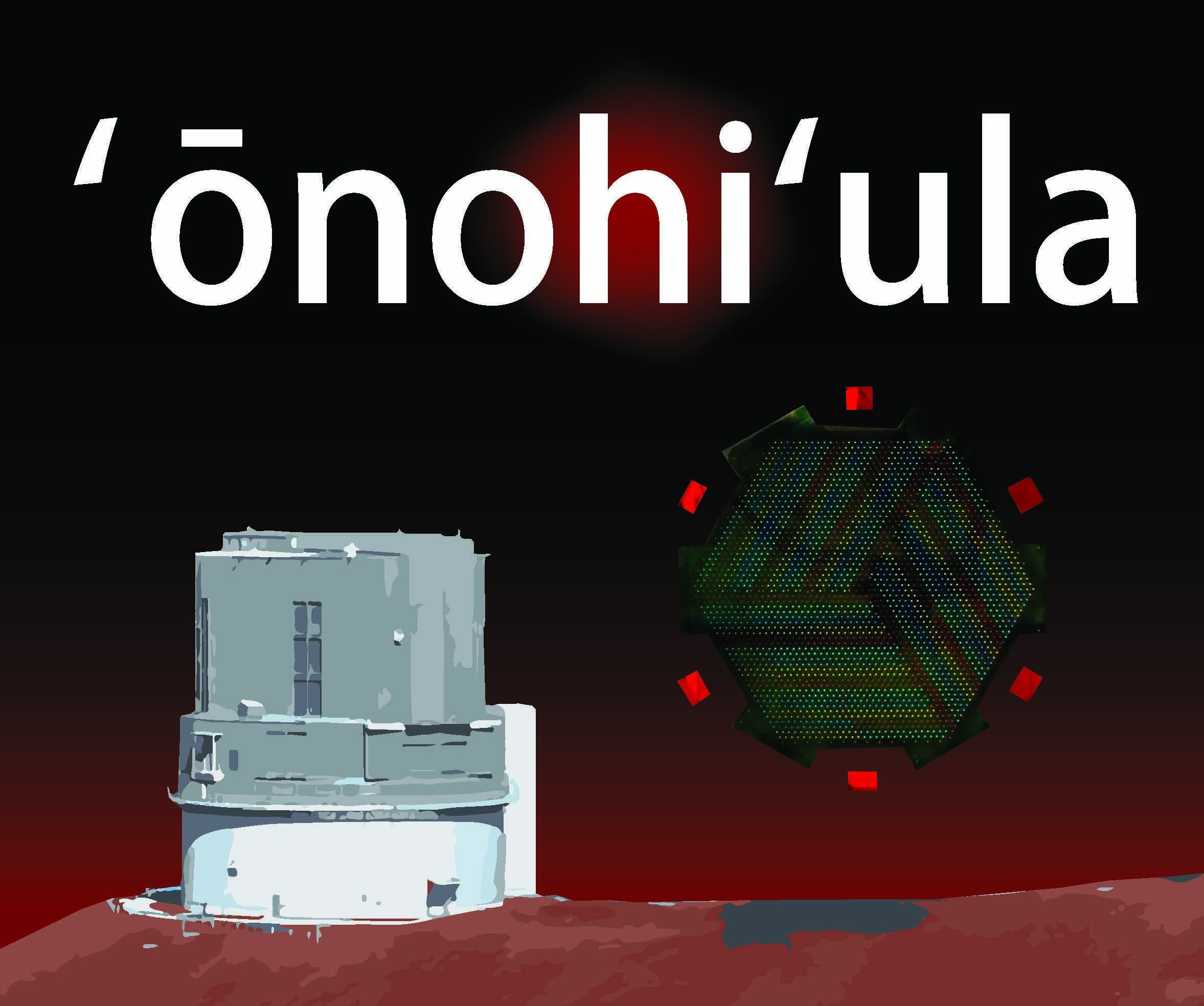
Figure 1: Stylized visualization of Ōnohiʻula PFS. (Credit: Kapuaonaona Roback/'Imiloa Astronomy Center/PFS collaboration)
The Prime Focus Spectrograph (PFS) is a wide-field, multi-object spectrograph installed at the Subaru Telescope’s prime focus. It can observe up to about 2,400 objects simultaneously across a wide field of view and obtain their spectra over an extensive wavelength range—from visible to near-infrared light—in a single exposure. Since it began full science operations in March 2025, PFS has been opening a new era of large-scale spectroscopic surveys in cosmology, galaxy evolution, and the structure of the Milky Way.
On November 19, at the naming ceremony held at the base facility of Subaru Telescope in Hilo, Hawaiʻi Island, Professor Larry Kimura of the University of Hawaiʻi at Hilo formally presented the Hawaiian name ʻŌnohiʻula.
The name ʻŌnohiʻula is rich with meaning. The word ʻŌnohi refers to "what one perceives from their sight," an idea inspired by the role of the telescope’s prime focus—where ʻŌnohiʻula PFS is mounted—as a kind of "eye." The component ʻula means "red," evoking both the countless redshifted galaxies that ʻŌnohiʻula PFS will observe and the studies of the early Universe and galaxy evolution—our cosmic origins—that these observations will enable.
Kimura further explains, "The name ʻŌnohiʻula represents the spectrum of the rainbow that we can see here, on the ground on Earth, and the eye of the instrument and in particular the color red, a sacred color which is associated with what we call the heavens in Hawaiian culture."
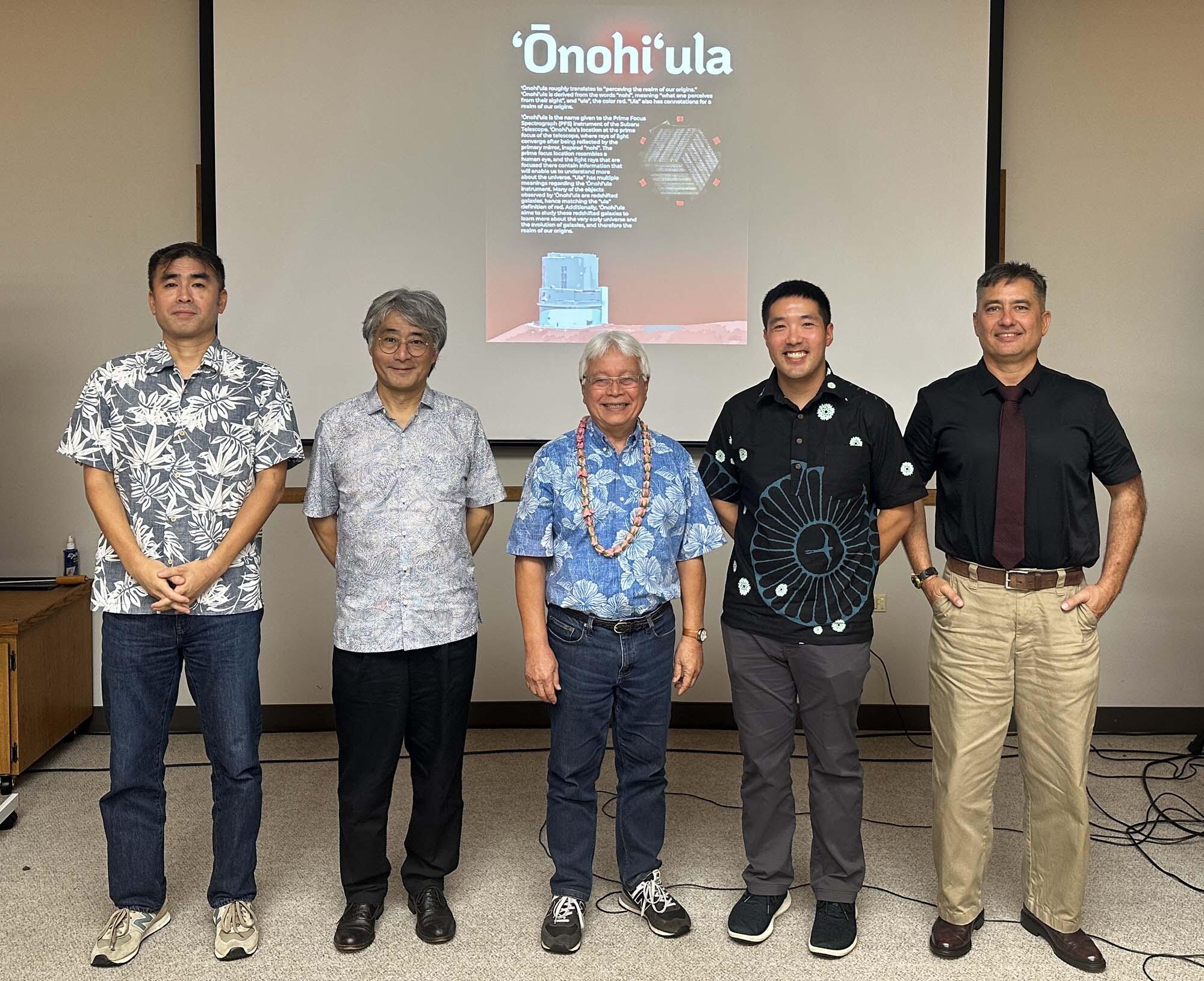
Figure 2: Attendees at the naming ceremony. From the left: Naoyuki Tamura (Subaru Telescope), who has served as the PFS Project Manager; Hitoshi Murayama (Kavli IPMU, University of Tokyo/University of California, Berkeley), who leads the PFS collaboration; Larry Kimura (University of Hawaiʻi at Hilo); Devin Chu (ʻImiloa Astronomy Center), a Hilo-born astronomer; and Christian Wong, of the Subaru Telescope Public Information and Outreach Office and Executive Director of the Hawaii Science and Technology Museum. (Credit: NAOJ)
This naming reflects a deep resonance between state-of-the-art scientific exploration and perspectives grounded in Native Hawaiian knowledge. It symbolizes Subaru Telescope’s commitment to honoring both the global importance of astronomical research and the profound cultural significance of Maunakea for the people of Hawaiʻi.
"It's very important for Subaru Telescope to connect to our culture here in Hawaiʻi and the way we can do that is through this name," says Kimura.
"ʻŌnohiʻula represents not just a powerful new eye on the Universe, but a commitment to conduct that exploration in conversation and collaboration with the people and place of Hawaiʻi," says Professor Naoyuki Tamura, who has long served as PFS Project Manager. "We are honored to carry this name forward as ʻŌnohiʻula PFS opens a new era of discovery."
Professor Hitoshi Murayama, principal investigator of PFS, expresses both gratitude and resolve: "Our instrument received a beautiful name in the Hawaiian language. It represents the science of PFS very well. I have a renewed resolve to make sure we will produce exciting science with ʻŌnohiʻula PFS just as this name indicates."
The instrument will be referred to as ʻŌnohiʻula PFS in scientific publications and press releases, expressing Subaru Telescope’s ongoing respect for Hawaiian culture and its people.

Figure 3: Larry Kimura (right) and Hitoshi Murayama (left) discussing the meaning and cultural background of ʻŌnohiʻula, as well as the instrument’s key features. Kimura, a renowned Hawaiian language and cultural expert, is also known for giving the historic first-ever imaged black hole its Hawaiian name Pōwehi, derived from the traditional Hawaiian creation chant Kumulipo. (Credit: NAOJ)
 Guidelines for Use