
Subaru Gallery
Subaru Gallery TOPLenticular Galaxy NGC 4996
August 26, 2026
Last updated: September 13, 2026
Last updated: September 13, 2026
Detail
Low Res. (46 KB) / Mid. Res. (860 KB) / High Res. (8.7 MB)
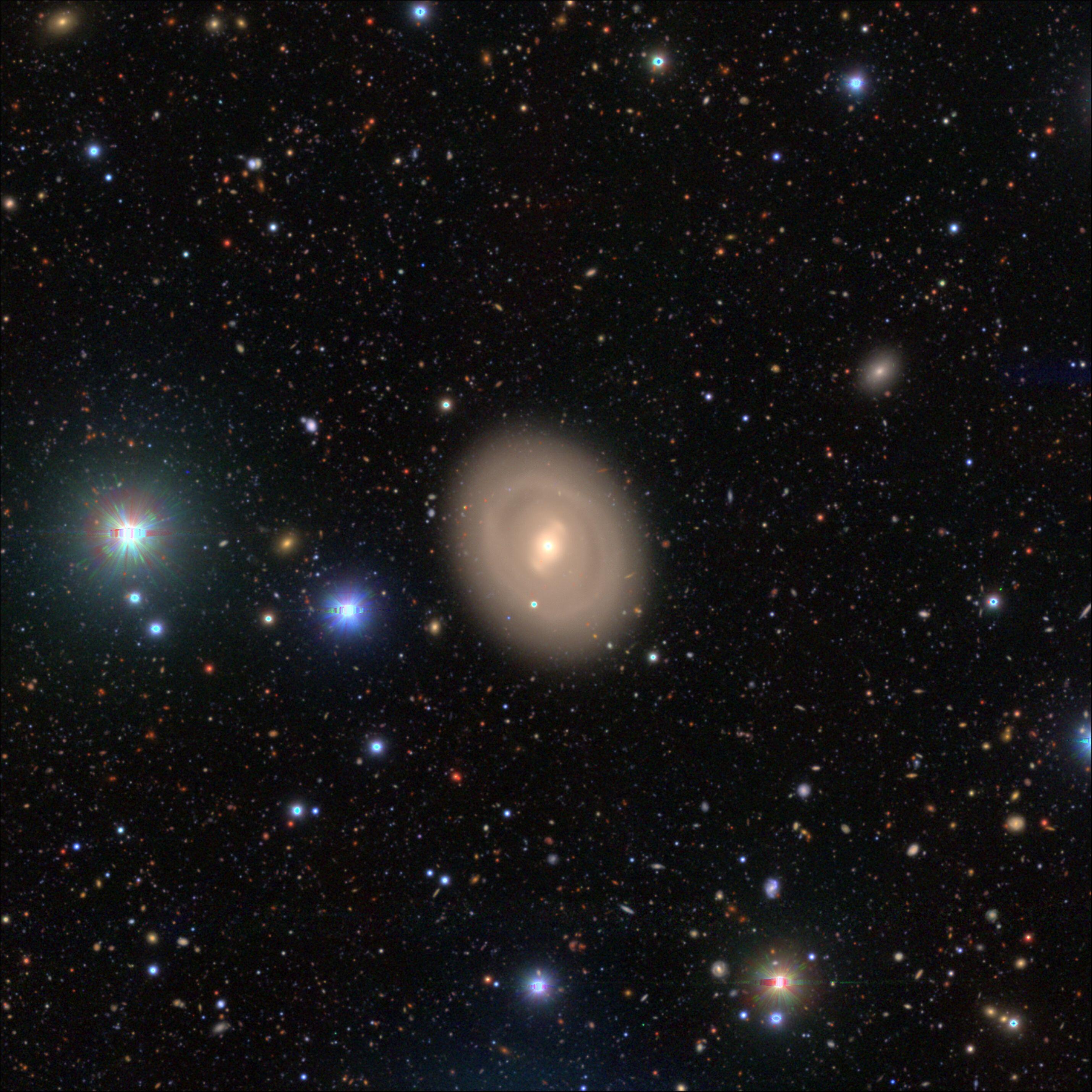
A lenticular galaxy, which means "lens-shaped," occupies an intermediate position between elliptical and spiral galaxies in the Hubble Classification scheme. These galaxies exhibit little or no ongoing star formation and lack the prominent spiral arms that characterize spiral galaxies. Instead, many lenticular galaxies feature a bright central bar and, in some cases, a faint outer ring, both of which are visible in this galaxy.
Astronomers believe that lenticular galaxies have lost much of the gas necessary for forming new stars. As star formation ceased, their spiral arms may have gradually faded from view. The bar and ring structures observed today are thought to be remnants of the galaxy’s former disk. Galaxies slowly change their appearance over time, and this lenticular galaxy may provide us with a glimpse of one stage in that evolutionary transition.
(Credit: NAOJ; Image provided by Masayuki Tanaka)
【Distance from Earth】260 million light-years
【Instrument】Hyper Suprime-Cam (HSC)
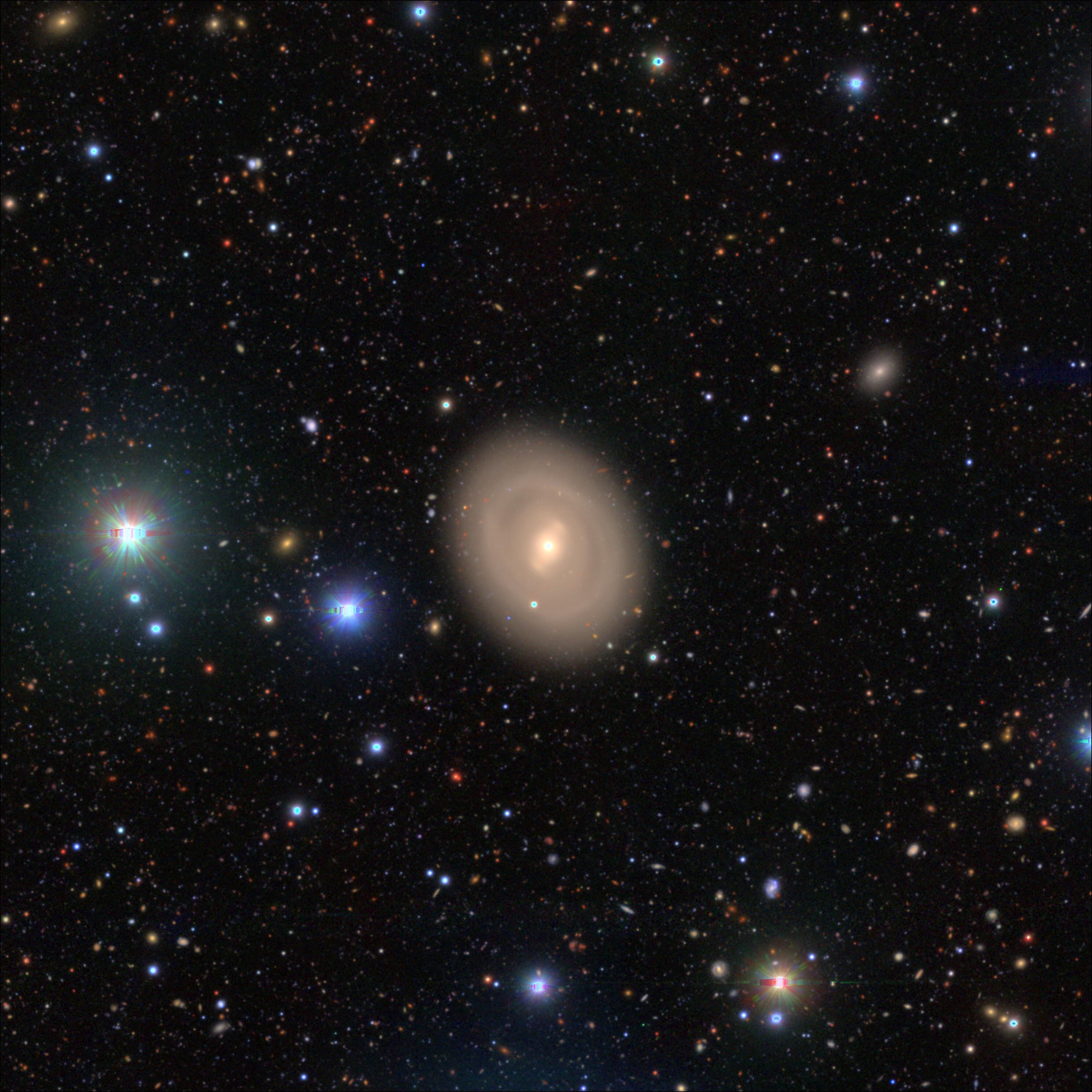
A lenticular galaxy, which means "lens-shaped," occupies an intermediate position between elliptical and spiral galaxies in the Hubble Classification scheme. These galaxies exhibit little or no ongoing star formation and lack the prominent spiral arms that characterize spiral galaxies. Instead, many lenticular galaxies feature a bright central bar and, in some cases, a faint outer ring, both of which are visible in this galaxy.
Astronomers believe that lenticular galaxies have lost much of the gas necessary for forming new stars. As star formation ceased, their spiral arms may have gradually faded from view. The bar and ring structures observed today are thought to be remnants of the galaxy’s former disk. Galaxies slowly change their appearance over time, and this lenticular galaxy may provide us with a glimpse of one stage in that evolutionary transition.
(Credit: NAOJ; Image provided by Masayuki Tanaka)
【Distance from Earth】260 million light-years
【Instrument】Hyper Suprime-Cam (HSC)
Relevant Tags
Select Category