
Subaru Gallery
Subaru Gallery TOPGalaxy Pair NGC 3504 and NGC 3512
June 24, 2026
Last updated: July 8, 2026
Last updated: July 8, 2026
Detail
Low Res. (800 KB) / Mid. Res. (2.6 MB) / High Res. (6.4 MB)
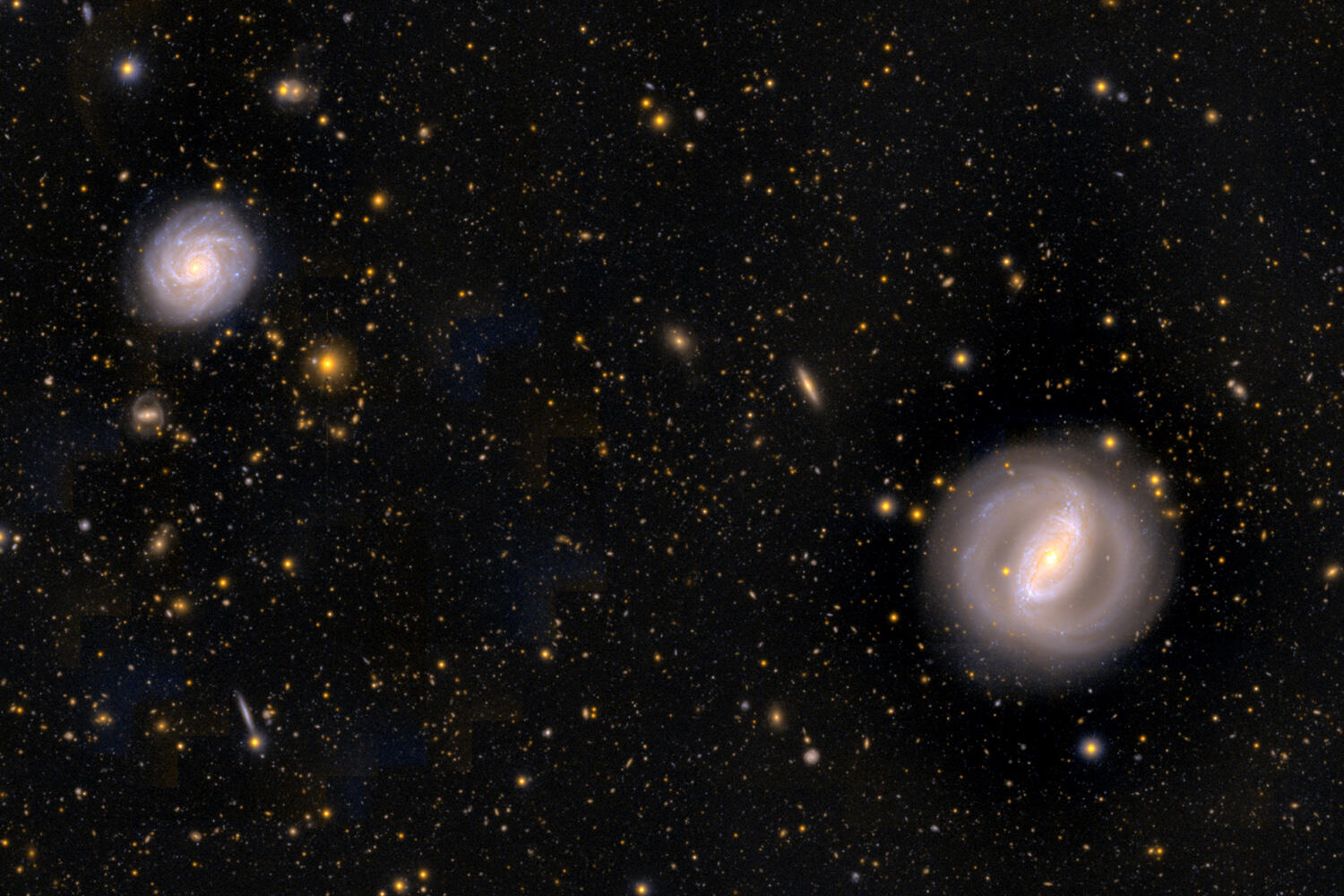
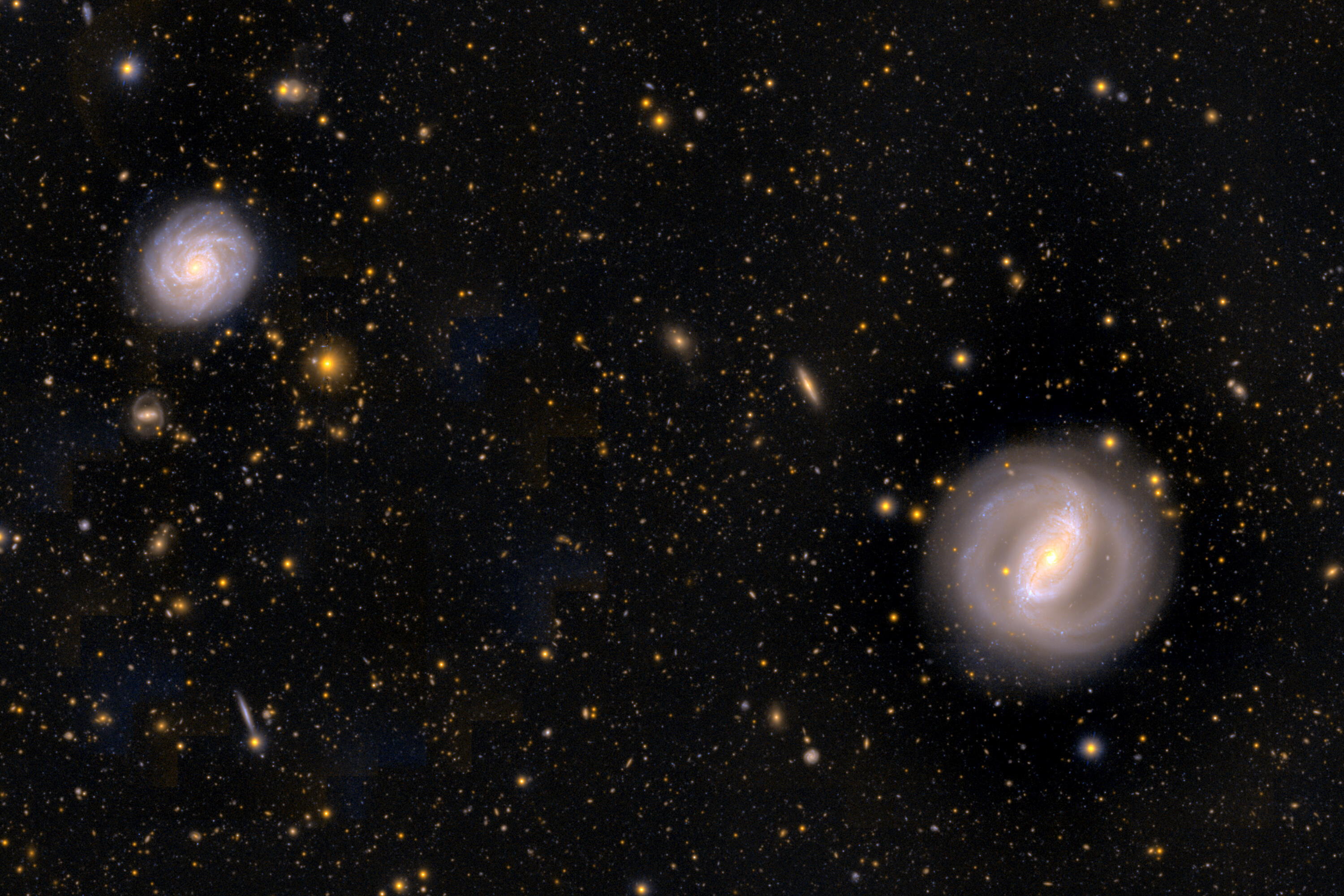
This striking pair of galaxies lies in the constellation Leo against a backdrop of distant galaxies. The barred spiral galaxy NGC 3504 is seen on the right, while the spiral galaxy NGC 3512 appears on the left. Although the two galaxies are thought to be physically close to one another, no clear evidence of ongoing gravitational interaction has yet been found.
NGC 3504 features a prominent ring with active star formation surrounding its central bar. Classified as a starburst galaxy, it provides an excellent laboratory for exploring the connection between bar structures and an exceptionally high rate of star formation.
By contrast, NGC 3512 is distinguished by its intricate, branching spiral arms. Although both are spiral galaxies, the two display remarkably different morphologies, making this an especially intriguing galactic pair.
(Credit: NAOJ; Image provided by Masayuki Tanaka)
【Distance from Earth】80 million light-years
【Instrument】Hyper Suprime-Cam (HSC)
This striking pair of galaxies lies in the constellation Leo against a backdrop of distant galaxies. The barred spiral galaxy NGC 3504 is seen on the right, while the spiral galaxy NGC 3512 appears on the left. Although the two galaxies are thought to be physically close to one another, no clear evidence of ongoing gravitational interaction has yet been found.
NGC 3504 features a prominent ring with active star formation surrounding its central bar. Classified as a starburst galaxy, it provides an excellent laboratory for exploring the connection between bar structures and an exceptionally high rate of star formation.
By contrast, NGC 3512 is distinguished by its intricate, branching spiral arms. Although both are spiral galaxies, the two display remarkably different morphologies, making this an especially intriguing galactic pair.
(Credit: NAOJ; Image provided by Masayuki Tanaka)
【Distance from Earth】80 million light-years
【Instrument】Hyper Suprime-Cam (HSC)
Relevant Tags
Select Category